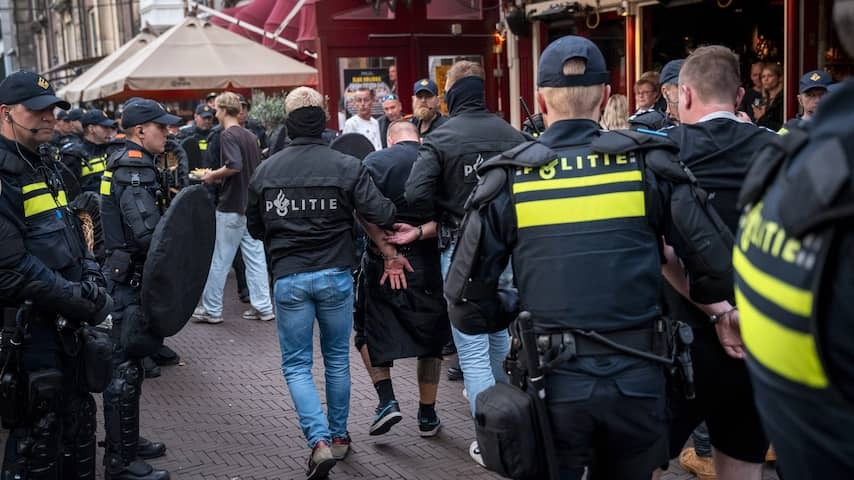
The police intervened hard on Saturday, after a demonstration against the asylum policy in The Hague had turned on riots. ME agents, tear gas and water cannons were involved. When can the police use such heavy resources?
Polarization on reports about the riots was not far away on social media. The police were accused of intervening harder than with other demonstrations, such as occupations from universities by pro-Palestinian demonstrators or the blockages of the A12 by Extinction Rebellion.
“It cannot be compared,” says sociologist Laura Keesman, specializing in violence situations around the police. “Demonstrants used quite violence on Saturday, and then the police will perform. Not only from self -protection, but also to restore order.”
Rioters also walked on the A12 during the riots. That is reminiscent of the blockades of Extinction Rebellion. But an important difference is that demonstrators from Extinction Rebellion do not use violence against the police.
“They sit down and let themselves drag themselves away,” says Keesman. Extinction Rebellion demonstrators may resist by not cooperating. But that falls under the demonstration law. “
When the UvA is occupied, the police sometimes went too far
Another example that comes along on social media is the occupation of universities by Pro-Palestinian demonstrators in 2024. It is suggested in social media messages that the police are being intervened less hard there.
For the sake of clarity: the police also used violence there, such as the occupation of the campus site of the University of Amsterdam. That happened, among other things, when the police were removed barricades from the demonstrators and stones and fireworks were thrown at agents, says professor of violence and order enforcement Don Weenink.
In addition, the police sometimes went beyond, as it turned out afterwards. “The police later concluded in a report that there was non-proportional police violence in two cases.”
Police make a choice based on behavior of protesters
It is actually impossible to compare such cases, Keesman emphasizes. “It is good to look at demonstrations in itself. You cannot always draw parallels. That way, occupying a space or building is covered by the right to demonstration, but violence is clearly not.”
The police also handle every demonstration in itself, in coordination with the mayor and public prosecutor. Agents monitor what happens during a demonstration. “The police have to make choices based on the behavior of demonstrators,” says Keesman.
“People come to demonstrate, that falls under the demonstration law. If demonstrators express themselves violently, the situation will change. Then we think: should we perform? And how should we do that? You have to weigh it on the basis of what demonstrators do.”
The police also made that assessment on Saturday, says a police spokesperson. “We look at how the demonstration is going and whether the protesters turn against the police. Based on that, we judge whether we use appropriate violence. We would rather not do that, but sometimes that is unfortunately necessary to have the peace return.”
The Police Intervend Harshly on Saturday after a demonstration Against the Asylum Policy in the Hague Turned Into Riots. Riot Police Officers, Tear Gas and Water Cannons Were Used. When can the police use Such heavy resources?
On Social Media, Polarization Around Reports About the Riots was not Far Away. The Police Were Accused of Intervening More Harshly Than In Other Demonstrations, Such As Occupations of Universities by Pro-Palestinian Demonstrators or the Blockades of the A12 by Extinction Rebellion.
“It is not Comparable,” Says sociologist Laura Keesman, Specialized in Violent Situations Involving The Police. “Demonstrators Used Considerable Violence on Saturday, and then the Police Will Take Action. Not Only for Self-Protection, but also to Restore Order.”
Duration the Riots, Rioters also Letterly Walked Onto the A12. This is Reminiscent of the Blockades of Extinction Rebellion. But An Important Difference is that extinction rebellion protesters do not use violence against the police.
“They sit down and let theme’s be dragged away,” Says Keesman. Extinction rebellion Protesters May Resist by Not Cooperating. But that falls under the right to demonstrate. “
Duration Occupations of the UvA, Police Sometimes Went Too Far
Another Example That is Circulating On Social Media is the Occupation of Universities by Pro-Palestinian demonstrators in 2024. Social media Messages suggest that the Police Intervended Less Harshly There.
For the Sake of Clarity: The Police also Used Violence There, Such as Turning the Occupation of the Campus of the University of Amsterdam. That happened, among other things, when the police removed barricades from the demonstrators and stones and fireworks were thrown at officers, Says Professor of Violence and Law Enforcement Don Weenink.
In Doing So, The Police Sometimes Went Further Thant was actual Allowed, It Turned Out Afterwards. “The Police later concluded in a report that there were two cases of disproportionate police violence.”
Police Make Choices Based On The Behavior of Demonstrators
Actually, IT is impossible to compare such cases with each other, Keesman Emphasizes. “It is good to look at demonstrations in Themselves. You Cannot Always Draw parallels. For Example, Occupying a Space or Building Falls Under The Right to Demonstrate, But Violence Clearly Does Not.”
The Police also Treat Each Demonstration On Its Own, in Consultation with the Mayor and Public Prosecutor. Officers Monitor What Happens Turn A Demonstration. “The Police Must Make Choices Based On The Behavior of Demonstrators,” Says Keesman.
“People come to demonstrate, which Falls under the right to demonstrate. If demonstrators Express Themselves Violently, the Situation Changes. They they think: should we take action? And howhhould we do that? You have to to date it?”
The Police also made that assessment on Saturday, Says a Police Spokesperson. “We look at how the demonstration is going and whether the demonstrators are turning against the police. Based on that, we assess whether we use appropriate force. We prefer not to, but sometimes it is unfortunatary to restore calm.”