
Many Political Parties because to get Rid of the Complex Allowance System. “Working More Should Pay Off,” is the sentiment from Left to Right. But Abolishing Allowances also Concerns Support For Vulnerable Groups.
About Six Million Households in the Netherlands Receive One or More Allowances. They recurreive an avarage or 3,333 euros per month. This includes Money for Children, Childcare, Rent, Or Healthcare.
In The Run-up to the Elections, Political Parties Are Presenting Their Ideas About the Allowance System. It is an error-prone system that of Requires People to Repay the Government. Additionally, Dutch Citizens Receive Less Allowance When they Earn More. This can make the benefits of working more disappointing.
Among The Larger Parties, GroenLinks-PvdA, VVD, and D66 Ultimately Want to Abolish the Allowances. Smaller Parties like ChristenUnie and Volt also Propose Significant Reforms, Such As A Basic Income. The CDA is Less Ambitious But Wants Fewer Income-Dependent Schemes.
GL-PVDA and D66 Advocate for a highher minimum Wage and a Higher Welfare Payment So That Allowances Become Unnecessary for More People. The VVD Wants To Introduction A Maxim On The Amount Received from Income Support So That the Step Towards Working Pays Off More. The PVV Does Not Pay Attention to the Future of the Allowance System.
Allowance for Everyone?
The Election Programs Contain Many Ideas and Few Details. The Most Far-Reaching Idea is A Basic Income. Everyone would be then Receive the Same Amount per Month, Regardless of Income, Family Composition, and Assets. Working more would you pay off more, as you don’t lose anything if you earn more. Moreover, The System is very predictable and easy.
The Question is Whether Everyone Needs Such A Contribution. “If you abolish or simplify Allowances, there is less risk of errors,” Says Economist and Philosopher Huub Brouwer. “The downside is that there is less customization.”
The Institute for Public Economics (IPE) Already Developed a Proposal in 2023. Researchers from the Iphe Show That You Can Replace the Current Allowances with a Monthly Basic Allowance of 315 euros per Month, Plus 110 euros per Adult and 250 euros per child. Single Parents Receive An Extra 320 euros. They assume that childcare will be almost free, as several cabinets have promised.
Welfare Benefits Remain Intact in That Model, as the Allowances are not enough to live on. These, Like the minimum Wage, Can Be Increased Somewhat So That People Can Make Ends Meet More Easily And Need A Lower Allowance.
Economist Brouwer also supports raising the minimum wage so that people are less dependent on support. “That is good for relational equality in society. If there is a Group that has to ask for money, they are Dependent.”
Conflicting views on what is fair
The Ippe Researchers Wonder If Politicians Realize That Two Common Views About What is ‘Fair’ Are Contradictory. The first view is that people should not lose too much when they work more. The Second View is that a household with a high income does not need child benefits. But when the Allowances Disappear as Income Increases, we return to the first ‘unfairness’.
The System Becomes Much Simpler If The Allowance is Decoupled from the Amount of Someone’s Income, Says Economist Jasper J. van Dijk, Researcher at the Ippe. A single Surgeon would go then Receive the Same Amount Per Month As a Single Shelf Stacker. However, households above a certain asset limit are not entitled to the allowance.
Politicians naturally because to continuously to influence income policy. The Ippe Therefore Proposes The Introduction of Eight Tax Brackets to Tax Incomes Differently. Complex Regulations Such as the General Tax Credit Can then be Eliminated.
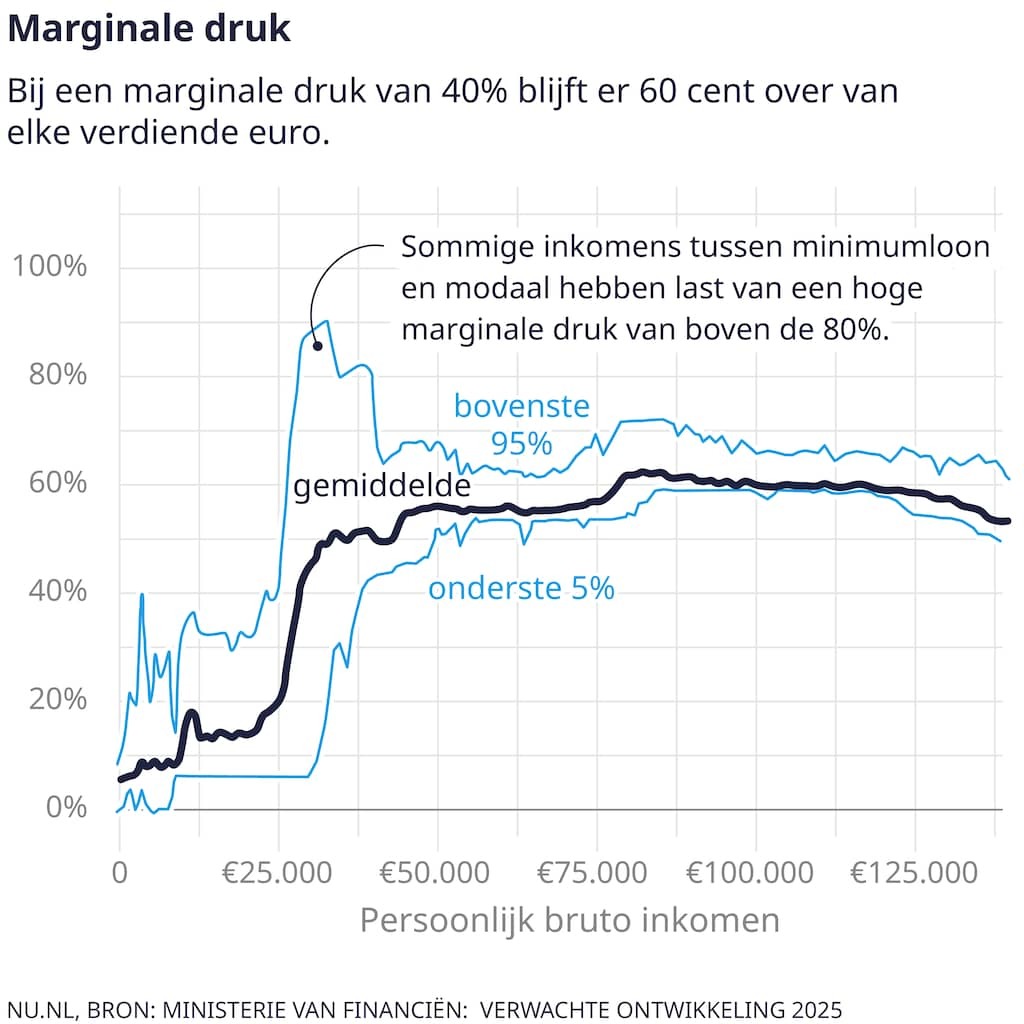
Some Households keep 20 cents of every euro
The Current Tax System is Full Of Allowances and Rules. As a result, it can yield little, eSpeciate for Lower Incomes, to work more. As soon as the salary rises, all kinds of Allowances are eliminated.
A minority of incomes between the minimum wage and the median wage keep less than 20 cents of every extra euro earned. Most people keep at least 50 cents of every euro that come in extra.
Politicians because people to keep more money so that they work more hours. But Research shows that workers only react to a limited extent to such a financial incentive.
Many Errors When Applying for Allowances
Another Disadvantage of the Current System is that People are responsible for Applying for Money Themselves. In practice, This Often Goes Wrong. Approximately 23 percent of Allowance Recipients have to repay money. For More Than 500,000 People, IT Conerns More Than 500 euros, Accordance to a Report from the Ministry of Finance from 2024.
Partly out of fear of repayments, there is a group of people who do not want an allowance. It is estimated that this groups 10 percent of the people who are entitled to healthcare and rent allowances.
Furthermore, Municipalities Offer Help to Lower Income Groups, Such as Special Assistance Or A Free Washing Machine. “An Average Municipality Has Fifteen Different Schemes,” Says van Dijk. For Many Residents, The OVERVIEW is Lost, Causing Them to Fall Below the Poverty Line Anyway.
‘We Have Been Standing Still for Twelve Years’
The problems with the allowance system are not new. In 2018, The Allowance Scandal Came to Light, Leading to a New Wave of Criticism of the System. Several Cabinets are preparing for the end of the childcare Allowance in its current form. But the end of the allowances is not yet in sight.
“We have bone standing still on this file for twelve years,” Says van Dijk. “Even if everything agrees with each other, it is a long-term process. Citizens still face risks all that time and, moreover, do not all apply for the allowances. It is all the more urgent to do something about it now.”