Opec Has Been an Important Factor in the Oil World For Years. But producers Like the United States and Brazil Are Changing the Market, and Sustainable Energy is on the rise. Will the Organization Remain Relevant in the Future?
In recent years, more and more players have appeared on the oil scene. Besides The Opec Oil Cartel, The US Has Been SeriOutly Involved in the Oil Market for the Last ten Years, and a Country Like Brazil is also Producing More and More Oil. They Compete with the OPEC Countries, Says Energy Expert Lucia van Geuns. “That is a threat to the future of opec and opec+.”
That is also the reason Why Opec, which is 65 years old this week, recently announced that would gobrease production again. The Organization is Doing This To Remain Competitive with Countries Like the United States, Says Researcher Coby Van der Linde of the Center for International Energy Policy (Ciep).
In Addition to Competition, The Demand for Alternatives to Oil Has also Increased Significantly in Recent Years. But Althegh the Energy Transition Has Become An Increasingly Important Topic of Conversation in Recent Years, The OPEC and OPEC+ Countries Are Not Yet Very Worried About The Future.
The Energy Demand is Still Fossil-Driven, Van Geuns Explains. “That’s because there is no large-scale replacement for oil in, for example, aviation and shipping. And altheoth the electric car is gaining ground, it is not really a replacement for the fossil variant, as specifically in emerging economies.”
As a Result, Oil Production is Still Increasing Every Year. “But I Expect That To Change In The Next Ten Years; then Oil Demand Will Decrease,” Says van Geuns. “It will be slow at first, but it will happen.”
What are opec and opec+?
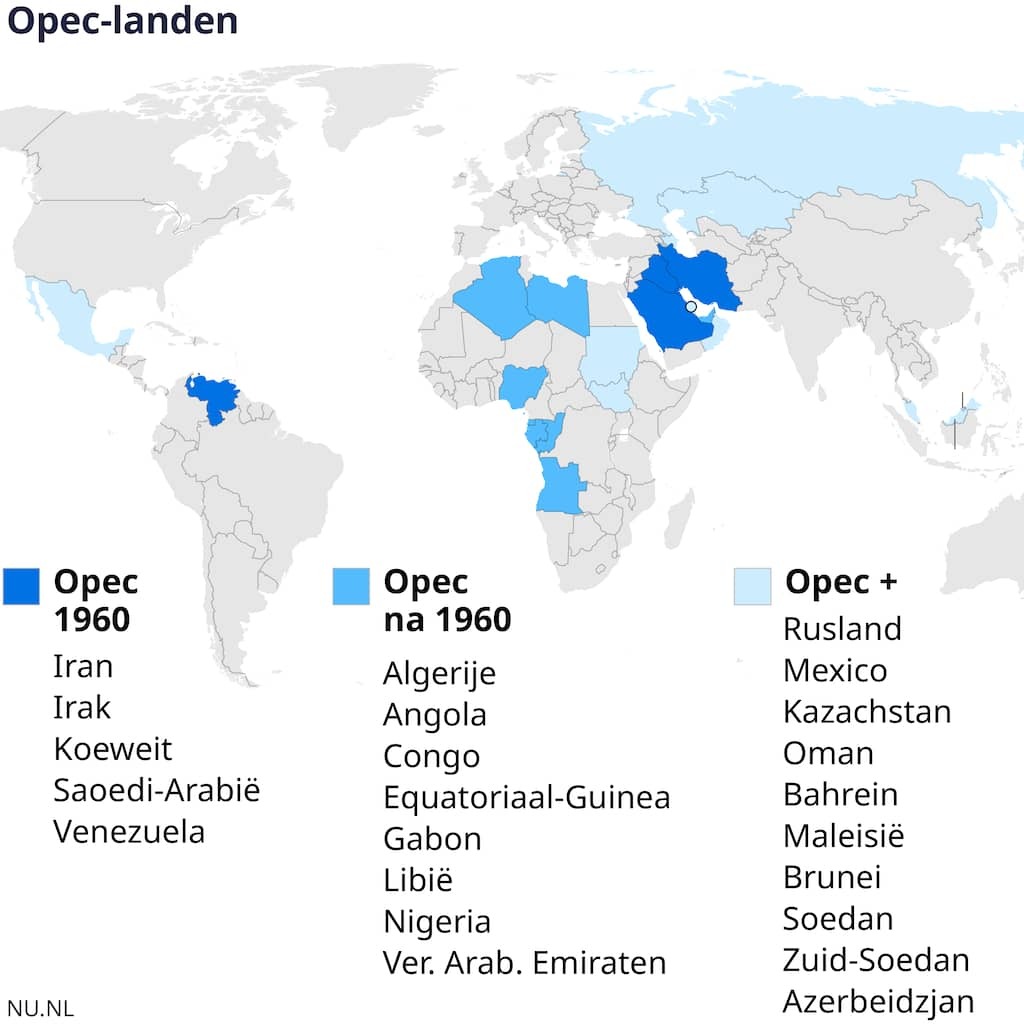
The Organization of the Petroleum Exporting Countries (OPEC) is 65 years old on September 14. It started in 1960 as an association of Countries That Together Export a Large Part of the Oil. Until then, Mainly Western Oil Companies Determined International Prices and Production. OPEC Wanted to change that by Jointly defending interests and coordinating production.
In 2016, The Oil Cartel was Expanded by Working Together with Other Major Oil Producers Under The Name Opec+. Together They Are Responsible for 60 percent of Global Oil Production.
Investing in Sustainable Energy is not for everyone
Demand Will Indeed Decrease, But It Remains to Be Seen How the OPEC Will Immediately Feel About This, Van Der Linde Adds. “Will the Demand for Opec Oil Decrease, or Will the Demand for Oil From Countries Such as the US or Brazil? The Countries with the Lowest Production Costs Have a Greater Chance of Reaching the End of the Oil Era. A Number Costs. They. Lucky.
However, The Shift to Sustainable Energy Has also Given the OPEC Countries Something to Think About. Where Previously Large Investments Were Made in Oil, Large Oil Companies, Such As The Saudi State-ONDED Company Saudi Aramco, Are Now also Focusing on Sustainable Energy.
But not Every Opec Country Has Money for That. “Where Saudi Arabia can Easily Look at Alternatives, Countries Like Venezuela Have Less Room for That,” Says van Geuns.
That is why the opec countries are also looking at the energy transition together. Accordance to Van Geuns, They All Want the World to Remain Dependent on Oil for a Long Time, But Their Visions for the Future Differ. That is why it is important that they determine a common course. “Internal Division is also a threat to cooperation.”
Even more new Oil Countries
Althegh Opec is also looking at sustainable alternatives to oil, we are not yet rid or fossil fuels. “It is very normal that if there is a better, cheaper technology, we will choose it,” Says van der Linde. “For example, Coal is hardly used in Europe anymore. But in Countries Like India and China, Coal-Fired Stations are Still Being Built.
For Example, Guyana Has Rapidly Developed Into One of the Fastest Growing Oil Producers in the World. Van der Linde: “We have not yet pumped up the last oil. Many Countries That Have Emitted Little CO2 in the Past Now also Want to Participate.”
And as long as the oil market continues to grow, opec will remain relevant. The OPEC Member States also Still Have a Lot Of Oil In The Ground. Countries Like Guyana Can Increase Competition, But Ultimately They Remain Dependent on the rules of the Game That Opec and Opec+ Determine in the Market.