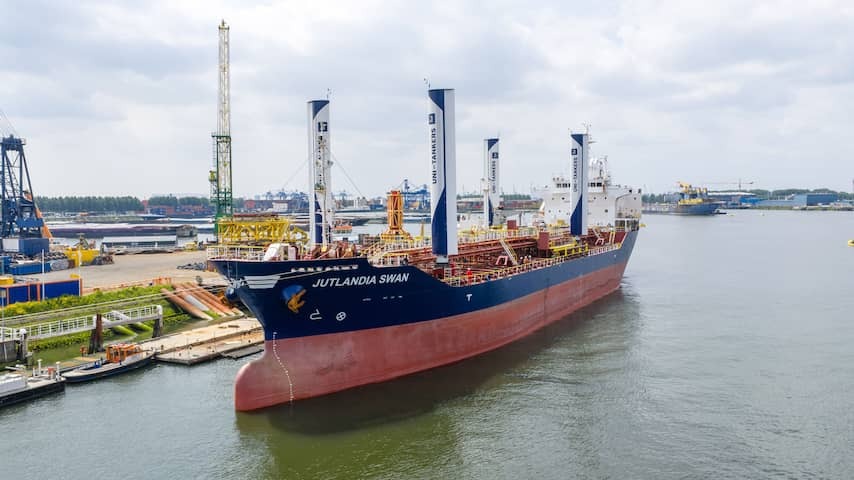
The Shipping Industry Faces a Huge Sustainability Operation in the Coming Decades. In The Fight Against Climate Change, Companies Are Now Turning Back To An Energy Source That Ships Already Used 6,000 Years ago: The Wind.
You Might Think Of Wooden Masts, White Sails, And Maybe A Pirate with An Eye Patch In A Crow’s Nest When You Think Of A Sailing Ship. But the modern Sails that are Being installed on more and more cargo ships have little to do with that, as was recently showing the world port days in Rotterdam.
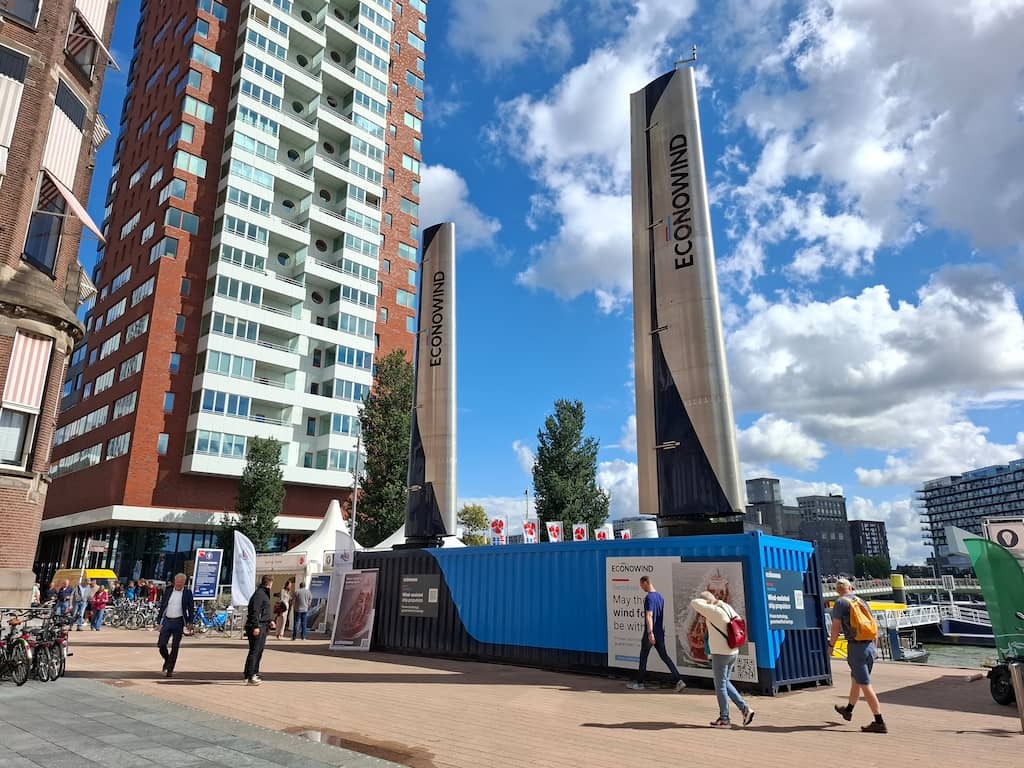
In Front of Hotel New York, Two Metal Sails from the Dutch Company EconoWind Were Erected on a Container. Some Hotel Guests Suddenly Looked Out Of Their Third-Floor Windows at These Modern Gadgets, which Mainly Look Like Aircraft Wings.
That is also exactly how they work: just as the airflow along wings Ensures that an aircraft is lifted, the wind that passes along these sails pushes a ship forward. The Difference is that Econwind’s Sails Still Have Fans That Suck The Airflow Closer to the Sail, Greatly Improving The Overall Performance.
This Ensures That Modern Cargo Ships Can Once Again Make Use Of An Abundant Free Energy Source. The Reduction in Fuel Consumption Depends Heavily on the Route and the Type of Ship, But EconoWind Promises That the Sails Will Yield An Average Saving of 10 to 15 percent.
That may sound limited, but since large cargo ships quickly use tens of thousands or kilos or fuel per day, it quickly amounts to significant savings on co2 emissions and costs.
Climate Rules for Ships are Becoming Increasingly Strict
“It is now a Proven Technology,” Says Gust Biesbroeck, WHO, With the Prow Capital Fund, Finances The Sustainability of Ships. “In a number of years you can earn back your investment. That is already the case, and will be even more so when more exensive green fuels are used.”
The Shipping Industry is Facing Increasingly Strict Climate Rules. Sea Ships That Moor In Europe Already Have To Pay More And More For Their CO2 Emissions via The EU Emissions Trading System. In Addition, it is Becoming Compulsory to use More and More Sustainable Fuels.
Countries at the International Shipping Organization imo Have also Reached an Decree in Principle on the Introduction of a Global CO2 Tax From 2027. In October, that should normally be approved, although us president donald trumping toest threeft threeft threeft threeft threeft threeft threeft threeft threeft threeft threeft threeft threeft threeft threeft threeft threeft threeft threeft threeft threeft threeft threeft, In favor.
Increasingly larger Sails
The International Climate Measures Are Having An Effect, also Sees Commercial Director Chiel de Leeuw or EconoWind. “I have leg in the maritime industry all my life and as long as I walk around there we have talking about sustainability. Now there is finally a push, the moment is there.”
From a factory in Zeewolde, The Company, Founded in 2016, has now Sails to Doses of Shipping Companies. For the time being, these are mainly narrower ships that, for example, Sail along the European Continent, But EconoWind is Already Working on Larger Sails of 30 meters High, which are Suitable for Ships that Cross The Oceans. “We are opening up a new market with that,” Says de Leeuw.
Competitors Such as the Finnish norspower, which uses a different technique in the cylindrical sails, are also working hard. But not all ships opt for sails as a way to Become greener. Sometimes they don’t fit on the deck, or other options are more obvious.
Biesbroeck’s Fund, For Example, also Financed Many Ships That Will Sail With A Combination of A Diesel Engine and A Large Battery. Such Hybrid Technology is a special Suitable for Ships That Travel Shorter Distances, and Can Therefore Regularly Charge the Battery.
Shortest Route Not Always The Fastest
Sailing with the Wind Requires a Change of Mentality Among The Crew of a Ship and Actual Throughhout The Shipping Industry, Sees Inna Brockhoff. She is an experienced sailor and has trained crews in Sailing with Modern Sails. “With Sails, The Shortest Route is not always the fastest route.”
Cargo Ships are set up to Sail to Their Destination in As Straight a Line as Possible. Anyone Who Wants To Sail Efficiently Can Sometimes Better Sail a Little Further to use the Wind As Well as Possible.
If a captain knows how to take good account of the weather conditions on the route, a ship can save much more fuel than otherwise, says brockhoff. “If he doesn’t find that interesting, or dosn’tn’tn’tn’tn’t Knowledge about it, The Systems Will Not Be Used Optimally.”
Accordance to Her, it is Therefore Important to Offer Lessons on this again at Shipping Schools, and to Improve the Software That Plans Optimal Routes. It would also help if ports were more flexible, so that it does not matter if a ship moors a day earlier or later to use the wind optimally.
Brockhoff is Optimistic About the Future of Wind Propulsion for Ships. “It can’t be stopped anymore, the development is going very fast,” She says. “Many people think: It’s romantic, we’re going back to the old days. But that’s absolutely not the case. The techniques we use that wind make much more possible than we use to be able to.”